Showing posts with label Economics. Show all posts

Monday, June 22, 2020

Ozone and the I-49 Connector: Why should we care?

DOTD I-49 Urban Route.
Recent local news articles on KATC and in The Acadiana Advocate  reported an LDEQ warning that on June 19 Lafayette would have high levels of ozone. LDEQ declared an Ozone Action Day for Lafayette. Why should we care about ozone?

First, high ozone levels are a risk to health, particularly among our most vulnerable citizens. Those who work or exercise outdoors are also at risk.  

Second, Lafayette has in the past been close to non-attainment for ozone, while Baton Rouge has been out of compliance. Currently all of Louisiana is considered to be in compliance with the federal standard of 70 parts-per-billion for ozone. Lafayette air pollution has improved, but there are continuing calls to make the ozone standard more protective. Non-attainment matters to Lafayette's future economic growth which could be impacted by restrictions and new requirements placed on any industry wanting to locate here. Beyond that, the most sought after companies looking for a new location are far less likely to choose a city with recognized poor air quality. Bottom line: our current good air quality is a plus for Lafayette to recruit new economic development. 

Finally, what has ozone got to do with the I-49 Connector? If you listen to Louisiana DOTD and their consultants who are writing the I-49 Environmental Impact Statement you might think ozone and air pollution have nothing to do with their plan. But, our biggest source of ozone in Lafayette is from cars. Common sense tells us that the proposed elevated interstate through the heart of our city is going to concentrate heavy traffic on city streets that lead to and from the interstate. Further, much local traffic will avoid using the elevated highway because of its limited points of access and exit. Those cars and trucks will be forced to sit in traffic on city streets. And, if the Connector has tolls, expect even more traffic forced down to city streets. Expect troubling increases in ground level ozone.

LRX Bypass Corridor Options (DOTD)
This doesn't have to happen! The proposed Lafayette Metro eXpressway (LRX) would allow through traffic and hazardous cargo to bypass the central city. For almost two decades we the taxpayers have funded planning for the LRX bypass. It is time to act and choose this alternative. The LRX would draw traffic away from easily congested urban streets and save local tax monies as city street expansions are no longer needed. The LRX would improve rather than worsen ozone pollution in Lafayette. If the I-49 Connector is built, we will be stuck with its induced traffic congestion and resulting bad air in our city for decades. Let's just not go there! 


Friday, March 15, 2019

February 2019 LRX Public Meeting Comments

The comments below were submitted on March 15, 2019. The February public meeting that solicited these comments presented the Tier 1 Environmental Impact Study for the Lafayette western bypass termed the Lafayette Regional Xpressway or simply the LRX. Learn more about the meeting and the LRX by reading the recent Connector Comments meeting announcement. It is available by clicking HERE.

The period for public comments closes on March 18, so you may still have time to submit your statement of support, concerns, or questions. Although the attached comment is quite detailed, short comments simply stating support and/or concerns are of great value and provide evidence of public interest.

The meeting slide show included this information on how to provide written comments after the meeting:
  • Send comments to: HNTB Corporation,10000 Perkins Rowe, Suite 604, Baton Rouge LA 70810,
  • or, Email comments to kbprejean@hntb.com
  • Comments received or postmarked by March 18, 2019 will become a part of the record.

If you have submitted or do submit comments through one of these methods, please consider sharing your comments with us by pasting then in the comments section at the end of this article. However, do be aware that comments on this Connector Comments site are not official, so be sure to submit official comments as described in the bullets above.


__________________________________________________________

Comments of Michael G. Waldon, PhD
Following LRX Public Meeting February 28, 2019


The following comments are my comments submitted in response to the request for public comments at the Public Hearing held in Lafayette on February 28, 2019.
I have divided my comments into the following topic-related sections.

Statement of appreciation
Relationship to other projects and needed model scenarios
Where is the Eastern Corridor?
Arkansas example - phased funding and completion
Flooding
Preferred corridor selection
Public information and participation
Public support
2005 Study Corridor Map


Statement of appreciation

I first sincerely thank the LMEC for holding this hearing and giving the public an opportunity to share our support and concerns. Thanks is also due to the visionary citizens of Lafayette who saw almost two decades ago that the only viable path forward for a north-south interstate connecting I-49 segments was a bypass. At that time, the so-called I-49 Connector, the “Con,” was seen to be effectively dead; killed by fierce public opposition, environmental infeasibility, and legal challenges. And rightfully so.


Relationship to other projects and needed model scenarios

If we cannot call the LRX an alternative to the I-49 Con, then at least allow us to call it a substitute.

Although our Louisiana DOTD continues to waste many tens of millions of federal tax dollars on planning the I-49 Con, it is even less viable today than in the early 2000s when it was effectively abandoned. Today’s advancements in geochemical science provide an even better understanding of the environmental risk of further contamination of the Chicot aquifer, and there is a renewed concern for flooding since the 2016 regional flood disaster. Additionally, the massive negative impact of urban interstates, particularly on poor and minority communities has become even more apparent than it was  decades ago. The Con is today quite simply inviable (i.e. dead). For years the LRX plans were stalled in order to not “distract” the public with the promise of a substitute for the locally opposed Con. Let us delay no longer. The LRX is our most advanced proposed substitute for the failed Con, and I urge our professional, political, and civic leaders to now give its development their enthusiastic support. Lafayette does urgently need the LRX project. Although completion of the LRX may be far in the future, every distraction coming from the Con, and every other delay simply moves LRX completion further into that future.

If ever built, the I-49 Con is almost certain to be partially toll funded (https://connectorcomments.blogspot.com/2016/06/the-specter-of-tolls-on-i-49-connector.html). Former Secretary of Transportation Dr. Kam Movassaghi was quoted (The Independent, April 14, 2009) saying that tolls must be considered for funding I-49 construction. An expert speaking to a meeting sponsored by our Chamber of Commerce affiliate One Acadiana (The Advocate, October 22, 2015) suggested that a toll of $0.19 per mile might be used to fund I-49 completion, and an Advocate article (September 22, 2014) reported that a state funded feasibility study looked at $0.18 per mile for I-49 funding. Former State Senator and then I-49 South Coalition Director, Mike Michot, was quoted in that same article saying about I-49 South "It seems unlikely a project of that magnitude will be built without the help of toll dollars."

The infeasibility of building the I-49 Con project is highly relevant in planning for the LRX, as is the prospect of the Con also having tolls. Additional model scenarios need to be considered for LRX planning. First, the scenario that the I-49 Con will never be constructed needs to be considered as a scenario because this is in fact most likely. Second, the scenario that the I-49 Con is built but has tolls must be considered. Adding tolls to the I-49 Con in modeling will increase traffic flow and toll revenue of the LRX. Failure to include these added scenarios related to the future I-49 Con seriously impairs planning for LRX traffic and toll revenue. Failure to consider these scenarios could negatively impact Louisiana's financial negotiations in dealing with the private PPP project partner for the LRX. 

It seems relevant to mention here that despite the tens of millions of dollars already spent on I-49 Con planning, to-date the DOTD has refused to include an I-49  toll scenario, or to incorporate the LRX in any I-49 Con traffic models. To members of the public this appears to be a blatant attempt to inflate traffic projection to thus justify the Con project. This concern is relevant here because I hope that such manipulation of planning results is not a part of the LRX project. A refusal to run the added scenarios listed here would lead to a similar but opposite appearance. It would lead the public to think that the LMEC and DOTD are purposefully failing to consider scenarios in order to “put their finger on the scale” giving preference to the Con relative to the LRX substitute.

In summary of my concerns stated in this section, I am asking that two LRX planning scenarios (model runs) be added for projection of traffic and toll revenue. First, projections are needed for the most likely future in which the I-49 Con project is abandoned and never built. Second, The scenario that the I-49 Con is constructed as a toll funded project is additionally required. Planning for the LRX that does not consider these possible futures would have little credibility in the eyes of the public. 

Where is the Eastern Corridor?

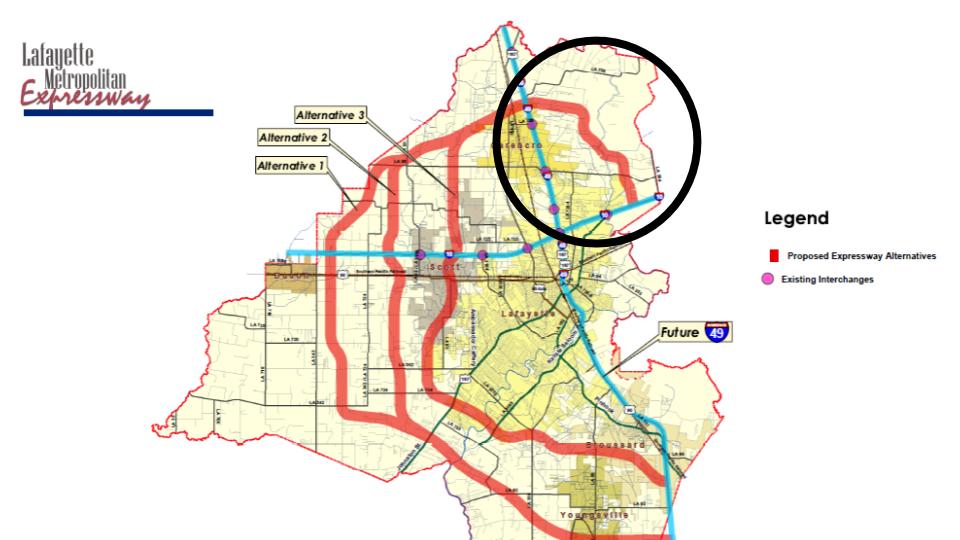
Earlier LMEC documents map an eastern corridor extending from I-49 north of Carencro to I-10 west of Breaux Bridge. Documents include “TECHNICAL MEMORANDUM 4: ENVIRONMENTAL RECONNAISSANCE” dated February 2005, “LAFAYETTE METROPOLITAN EXPRESSWAY FEASIBILITY STUDY EXECUTIVE SUMMARY IMPLEMENTATION PLAN”  dated June 2005. Figure 4-1, “Study Corridor Map,” from the 2005 Technical Memorandum 4 is appended to the end of these comments for the reader’s convenience. I have seen no published planning or engineering study, or any rationale for dropping the eastern segment. Was a decision made to drop this option? Does any documentation of the decision exist and was the public invited to comment on the decision?

For many years local citizens have supported an eastern route bypassing Lafayette following the high ground of the Teche Ridge. Here are a few of the links demonstrating this long-term support information on this proposed roadway:
     Kelly Roberts Caldwell spokesperson comments for Lafayette citizen groups in the I-49 Connector FEIS, Volume II, page 299  dated April 30, 2001 https://connectorcomments.blogspot.com/2017/04/public-comment-from-16-years-ago.html
     Connector Comments blog, May 27, 2016, “The I-49 Lafayette Bypass Option: Teche Ridge” https://connectorcomments.blogspot.com/2016/05/the-i-49-lafayette-bypass-option-teche.html
     I-49 Teche Ridge Bypass Facebook page https://www.facebook.com/I-49-Teche-Ridge-Bypass-191859984503529/
     Harold Schoeffler’s presentation to the St. Martin Parish Council on February 16, 2016 https://soundcloud.com/mike-waldon-906517104/hschoeffler-stmartinparish-2016-02-16

Some have suggested that such a roadway might begin as a two lane expressway and expand where needed to four lanes. Combined tith the LRX, the Teche Ridge eastern bypass would provide Lafayette with a full loop. This would improve traffic, efficiency of travel, and attract desirable economic development to communities in both Lafayette and St. Martin Parishes.

This comment is directly relevant to the LRX plan because it appears that the proposed eastern corridor was aligned to connect with the eastern Teche Ridge bypass which has been so long supported by citizens here. While I understand that the LMEC desires, as far as possible, to keep roadway development within Lafayette Parish, it seems arbitrary and wasteful to drop the eastern corridor from all consideration. I ask that future planning include this eastern corridor as a potential future extension. 

Arkansas example - phased funding and completion

The Bella Vista Bypass (Arkansas Hwy 549) is being constructed in Arkansas as a part of their I-49 completion. I believe this is a good example of a state (Arkansas) listening to public concerns and developing a bypass rather than running the interstate through the heart of a community. The Bella Vista bypass has been designed and is being and constructed by ARDOT. It is being constructed one segment at a time as funding becomes available. While in Lafayette we are mired in I-49 planning that will likely never lead construction, Arkansas is building a highway. The Bella Vista Bypass is initially being constructed as a two-lane expressway which will be expanded to four lanes as funding permits. Arkansas has been able to design a viable project which will likely be completed long before we even begin construction. I urge the LMEC and Louisiana DOTD to consider using a similar incremental approach for the LRX. You can learn more about the Bella Vista Bypass from the Wikipedia article titled “Arkansas Highway 549,” by Googling news articles, and by downloading ARDOT project documents.

Flooding

In an urban setting such as the I-49 Con, finding hundreds of acres outside the flood zone for runoff retention is at-best expensive and at-worst impossible. However, in the rural setting of the LRX this is less of a problem and may actually be viewed as a project benefit. I urge the LMEC to make flood impacts from the LRX project an integrated part of planning. In other projects the Louisiana DOTD has been accused of failing to adequately consider flood impacts of their projects. My understanding is that, as a state agency, DOTD is not required to follow local ordinances requiring runoff retention or other flood impact analyses or mitigations. In spite of this I ask that the LMEC pledge to integrate runoff management planning into every level of LRX design including the plan development for roadway routing. In the rural setting of much of the LRX, retention ponds can actually be an aesthetic feature while possibly providing needed fill for roadway elevation. Landowners may also welcome retention ponds as neighboring features which improve property values and provide alternative drainage for development.  

Preferred corridor selection

I agree with the selection of the preferred corridor identified in the meeting handout. Not only does this selection best meet the criteria in the selection matrix, It is the alternative which may most quickly be constructed.

Public information and participation

At the public hearing I voiced my concern that the LRX web site (www.lrxpressway.com), was not being maintained, and information on the site appeared to be years out-of-date. I also noted that information from the 2017 public hearing had not been posted to the site as had been promised to me at that meeting. Following the 2017 meeting, I did try on multiple occasions to contact anyone from the LMEC about this, but was unable to do so using the outdated information then available on the web site. If I had expended more effort I could have likely made contact, but such a level of effort should not be required for a member of the public to simply get information.

I have additionally tried to find the schedule for the quarterly LMEC meetings, meeting agendas, and meeting minutes. As a public body in Louisiana, there are requirements that these be available on the web site. However, such information was not on the LRX web site. Following the February public meeting, I was told that some of this information is actually on the LEDA web site. However, I have not found this information on either the LEDA web site or the LRX site. The LRX website has an LMEC meeting page which is reached from a link on the “about LMEC” page:  www.lrxpressway.com/lmec-meetings/
However this page refers to the schedule of the 2011 meetings, and even that information is incomplete.

Please post on the LRX website all documents required by law and publish timely announcements of the quarterly LMEC meetings. At a minimum LMEC must meet the requirements of the Louisiana open meeting law, but I hope LMEC will exceed these requirements by actively seeking public involvement.

Since the February 2019 meeting, I do see that LRX public meeting materials have been added to the LRX web site for 2019, and prior public meetings including the 2017 public meeting. These posted documents have been useful and I thank the LMEC for providing them. However, I am unable to locate agendas, calendars, or minutes for the legally required quarterly meetings of the LMEC. I request that these either be provided on the LRX site, or that a link be placed on the LRX web site to wherever these documents are archived. I also ask that LMEC meeting announcements be prominently posted on the LRX website along with the agendas for upcoming meetings so that the public and media may attend.

Public support

There was a clear demonstration of the public’s interest in the LRX project shown by the standing-room only crowd at the February public hearing. Although I did hear mild concern from a few potentially impacted property owners, I did not hear a single person comment that they were opposed to this project. This stands in stark contrast to the near unanimous public opposition concerning the I-49 Con voiced at every public meeting held over more than two decades by DOTD and others. The public is not timid in voicing opposition, and I felt that the lack of any expression of opposition toward the LRX, as well as the many positive voices of strong support, together give an indication that the LRX project can be successful. The LRX can be a valuable addition to our region’s transportation infrastructure. I support its development. Thank you again for this opportunity to comment. 


2005 Study Corridor Map


February 2005 “Study Corridor Map” from Figure 4-1 in the report “Lafayette Metropolitan Expressway, Technical Memorandum 4, Environmental Reconnaissance.” The black circle was added to the figure to indicate the segment termed the eastern corridor in these comments.


Michael G. Waldon, PhD
Resident of Lafayette Parish, Louisiana

March 15, 2019

Monday, March 26, 2018

Evangeline Corridor Initiative - Your comments are due March 29, 2018

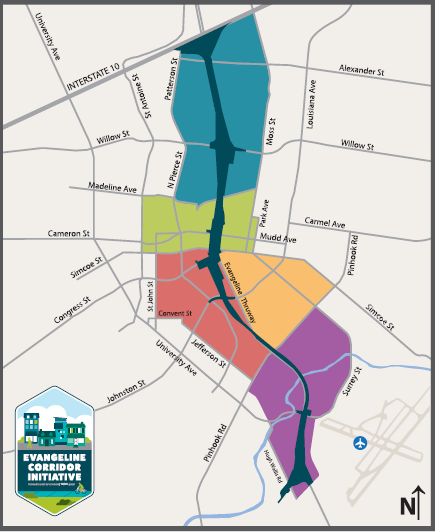
From page 14, ECI Final Report, March 9, 2018.

The Evangeline Corridor Initiative or ECI (formerly called the TIGER grant initiative) began over 2 years ago when the Lafayette government received a planning grant from the Federal government of $300,000, and matched this with an even larger local tax match. This planning effort is deeply intertwined with the Lafayette I-49 Connector's own tens of millions of tax dollars spent for planning. The ECI is now coming to an end, and it is time for the citizens to examine and comment on what we the taxpayers and residents got for our money.

The Evangeline Thruway Redevelopment Team (ETRT) at its March 12 meeting, accepted a draft Final ECI Plan and recommended the plan be made available for public comment. Two public "open house" style meetings (that is, public meetings where the public informed but is not invited to publicly speak) were held on March 21 and 22 to provide the public with information about the Evangeline Thruway Redevelopment Team (ETRT) plans for our community in the area surrounding the proposed I-49 Connector.  You can read more about the ECI through their web site which redirects you to their Lafayette Parish government page: www.evangelinecorridor.com

At these March open house meetings, representatives from Lafayette Consolidated Government, the ECI's professional consulting team, and the ETRT were on hand and were available to answer questions from citizens one-on-one. The 175 page ECI draft Final Report/Action Plan is available in print at the Rosa Parks Transportation Center at 101 Jefferson Blvd. To download the Report to your device click here. Public comments on the report are due Thursday, March 29, 2018 at noon. I urge every Lafayette citizen to examine this draft report and other materials from the ECI web site and submit their own comments on the draft plan. You may also comment on other relevant issues that should have been addressed in the study. In order to comment, you may
  1. Have left a written comment at the meeting (see the image of the ECI  comment card below).
  2. Fill out and mail or hand-deliver the ECI comment card which is available in pdf format by clicking here.
  3. Or, simply email comments to ETRT@lafayettela.gov
Don't forget, the deadline for comments on the draft final report is noon on Thursday, March 29!


After submitting my own comments to the ECI, I will publicly share them through an update or comment added to this post. After you submit your comments, you may also publicly share your ECI comments by copying them as a comment at the bottom of this blog post.

Thanks to all who provide their input on this plan.


----------------------------------- COMMENTS BY M. WALDON -----------------------------------
Note to readers - because I included a photo in my comments I must add them here as a blog update rather than simply making them a blog comment. To view other reader comments click on the word "comments" at the end of this post.


These comments related to the March 2018 ECI Open House Meetings and the Draft Final ECI Report. They are submitted by Dr. Michael G. Waldon, 110 Seville Blvd, Lafayette. I live in City/Parish District 3. I do wish to thank the ECI team for consideration of my concerns.

 
GENERAL COMMENTS

Relationship to I-49 Connector
A relationship between this TIGER Grant and the Lafayette I-49 Connector project clearly exists, but is unclear. I do see in provided documentation that this TIGER project, now termed the ECI, is considered a mitigation for the damage to the Corridor from the I-49 Connector project. I submit this comment addressing the ECI draft final report in the larger context of the I-49 Connector itself.

There is very strong opposition to the I-49 Connector throughout Lafayette Parish, and this opposition is particularly intense within the ECI corridor. There have been hundreds of citizens who have attended meetings to voice their opposition to this project. Opposition has been intense for a very long time, at least since the first EIS was presented almost two decades ago. Now, the ECI planned projects are presented as a carrot in a final desperate attempt to lure opponents into grudging support. This strategy will not work!

The public is not so foolish that they will believe that suddenly a district that has seen neglect for a century will suddenly become a target for local expenditures. The truth is that nothing in this plan is funded, and no funding mechanism has been identified. We see that the local government can’t be bothered to even maintain the property they already have within the Corridor. Why should we believe that the parish will suddenly have funds for new playgrounds in pocket parks, or even have money to keep the grass cut. Put simply, we are on our own. The I-49 spector reduces property values for Corridor homeowners today, and if it ever is funded for construction, it will destroy these communities and turn them into urban deserts. 
In supporting Lafayette’s application for additional millions of dollars of federal grant funds for continuation of the TIGER project, one councilman responded to our opposition to continuation of the TIGER funding at a Parish Council meeting. To paraphrase, he said that if we don’t spend the federal money someone else will. This hardly seems to be the prudent way we, the taxpayers, hope our elected representatives will spend our money. I urge all who are given the responsibility to allocate our tax dollars will use good judgement and spend our taxes as prudently as if spending their own money. Simply spending for the sake of spending? I say no! 

We have been assured that if there is strong local opposition the I-49 Connector (we call it the I-49 Con) will never get federal construction funds. If that is the truth, then the Con will never be built. 

Therefore, I conclude, the first thing to decide is - Will the I-49 Connector really be built? If yes, then drop all of these projects in the draft final report because there will be no community left to use them. And, if no - the I-49 Con will never be built - then we do not need the ECI. The Evangeline Corridor will bloom with renewed life if this spector of future destruction is removed. Property values will increase, private investment will return, and - note to our Council - tax revenues will grow. Let us hope that we stop spending federal money just for spending sake, and pursue alternative like the LRX, the planned Lafayette western bypass. 

My recommendation for the Final Report is to state early and clearly that the ECI report does not endorse the I-49 Connector, and that funding, construction, and maintenance of these projects is in no way dependent on the Con. Alternatively, state clearly that these projects are being proposed to mitigate the tragic destruction of our communities that will result from building the urban interstate through our city’s heart.

 
Pedestrian friendly
Throughout the draft final report I see the words “pedestrian” and “pedestrian friendly.” Sidewalks were not built so that utilities would have a place to put their poles! Before we pursue other pedestrian friendly ideas, we need to set a Parish-wide policy that new utility poles will never again be placed in our sidewalks or placed such that pedestrians or handicapped individuals in wheelchairs need to move into traffic to avoid the pole. Placing poles or other obstacles in our sidewalks is not only a safety issue, but also is a statement that pedestrians are valued far less than cars in our community. 


Hurricane Evacuation Capacity is Essential
Before, during construction, or after the vaporous I-49 Connector project is realized, the current capacity for hurricane evacuation must at a minimum be maintained on the Evangeline Thruway itself. If ever funded and constructed, the elevated roadway will provide limited resilience in the face of heavy rain and wind. As residents of Louisiana we know that elevated roads get blocked easily. High winds and rain preceding the storm may even force closure of the interstate to high profile vehicles like trucks. Hurricane evacuees often cannot buy gasoline because of long lines or loss of power. On a surface road, out-of-gas cars can more easily be move out of traffic. However, experience shows that long bridges are often blocked by out-of-gas cars. 
This is very relevant to any ECI plans along the Thruway. Until the surface level western bypass, the Lafayette Regional Xpressway or LRX, or other bypass is built I would not support any changes that “calm traffic” or reduce roadway capacity on the current Evangeline Thruway. 


City property
I commend the City/Parish leaders for showing an interest in the Evangeline Corridor area of our city. The neglect that this area has experienced in the past is clear. A recurring comment by residents at meeting that I attended was the lack of simple maintenance of city-owned and LUS property in the Corridor. The city seems unable to regularly mow the grass and keep up the appearance of their property in this area. This not only contributes to a blighted appearance, but also, right or wrong, makes us think that the residents of this area of Lafayette are less important to the powerful interests in charge of the city. Only now, when a plan to further destroy these communities with a six lane urban interstate through its heart do we hear of highway administration funds giving us unfunded plans for new projects. If you can not cut the grass and paint your fences, why should the public believe any of these dreams will ever be a priority? 


Here are examples of properties which are not properly maintained:


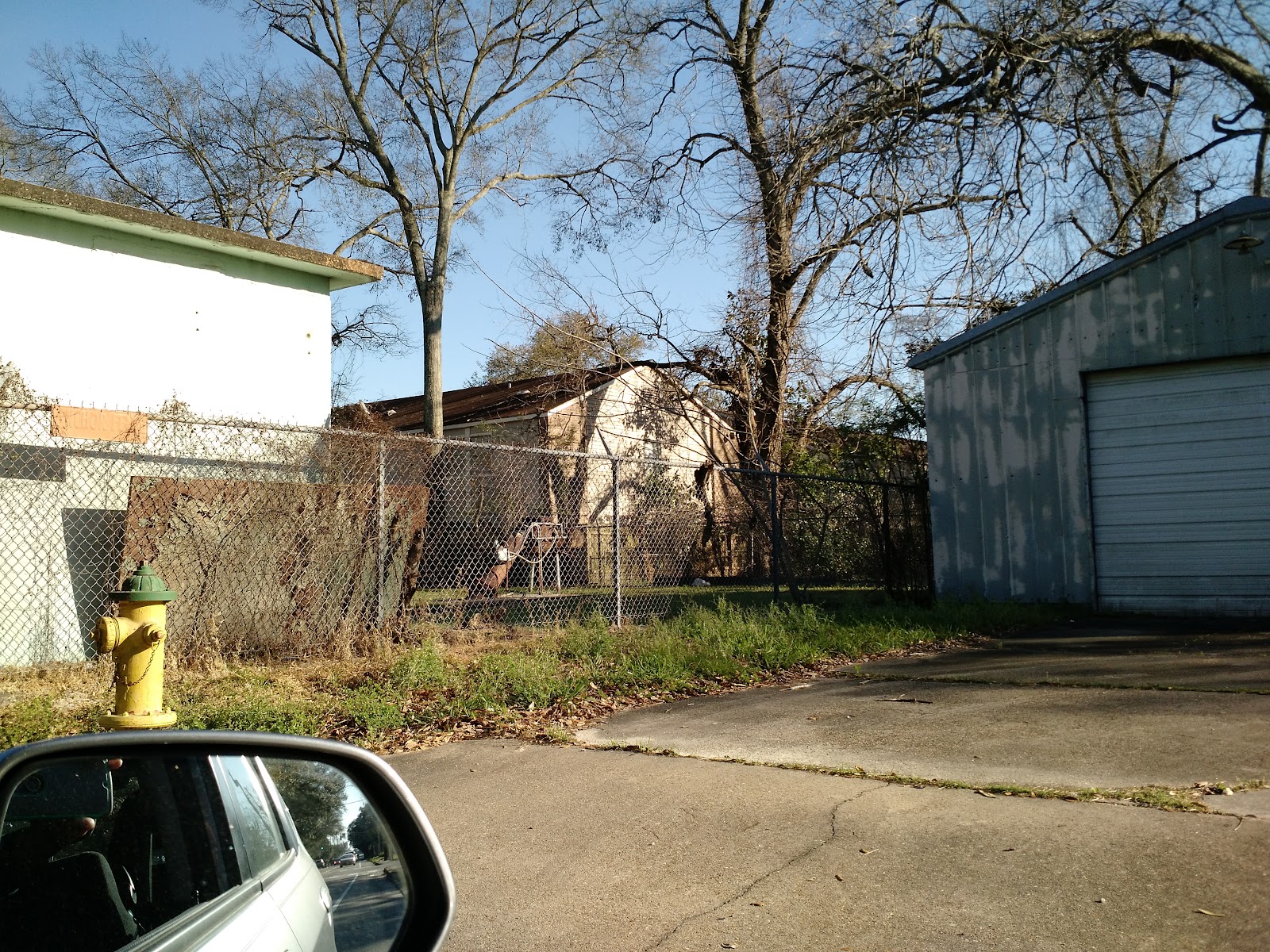
  • LUS Water Well #10 on Moss St at Park is no longer in production and has been described as abandoned (see attached photo).
  • The abandoned Grant Street Power Plant is unsightly and a public hazard from contamination.

At the meetings, residents gave a number other examples with which I was not familiar. In summary, the ECI draft final plan seems hypocritical when we see the apparent neglect received for care of City properties within the corridor. 


LUS Well 10 at Moss St at Park is abandoned and clearly looks the part! The photo is also available at the link https://goo.gl/f21aZn


PROJECT SPECIFIC COMMENTS


Iconic Structures
Throughout the I-49 Connector discussions and resident protests, we have heard of plans to build an ill-described bridge to signify the progressive nature of Lafayette. This seems to have moved forward and influenced the proposal for a Gateway Feature (project Gateway B). First, this is an idea that is ripe for ridicule. It is hard to see why the LCG and DOTD would provide such an opening in a community that can’t even fund a school tax. Tax opponents will use this as a hammer to destroy the whole ECI and Con programs. Second, we already have a beautiful gateway structure, our visitor center. We need a gateway that embodies Cajun and Creole culture, not a steel bridge or weird art. Those are fine for other places, but people visit us for the culture, and the current visitor center represents us very well. I am deeply saddened that DOTD plans to destroy the current center, and have been told that replacement will need to be at Parish taxpayer expense because we should have known better than to build it at its current location! In summary, rebuild the visitor center if the I-49 Con is ever built, and otherwise no iconic structure is needed.. 
 

Clay quarry
We have noticed that you plan to put a new park (project Gateway E) at what I believe is the old Clay quarry near the historic Lafayette brickyard and clay quarry (see The Attakapas Country: A History of Lafayette Parish, Louisiana by H. L. Griffin, p 52 and further) . This site is historically important in Lafayette. It is my understanding that most of the bricks for the old buildings in Lafayette came from this site. After the quarry was abandoned, it became a swimming hole for many of the young people in the city of Lafayette. The cool water that flowing freely from the now unconfined artesian aquifer must have provided cool recreation on hot days for many youth. However after two children drowned the council decided to fill the quarry. I am told that any fill materials that were available were used in filling the quarry including waste, trash and garbage - any sorts of materials that were no longer wanted. Today it is likely that this site not only provides contamination to the underlying aquifer and our water wells, but also may be a health hazard to nearby residents. Caution should be exercised in building a park at this location. 


Pedestrian bridge near Surrey Street
A pedestrian bridge near Surrey Street over the Vermilion is needed, and I am in firm support of the bridge proposed in the draft final report (project Vermilion E). I cannot recall ever crossing a less bicycle and pedestrian friendly bridge than the Surrey Street Bridge. Crossing on foot, I look up and down the road, then run as fast as I can to get across (tough job for an old man like me). There is absolutely no room for a pedestrian on this bridge if there are large vehicles passing at the same time. Do children attending the nearby Paul Breaux Middle School have to cross this bridge? I was thrilled to see the idea of a pedestrian bridge near this site suggested in the ECI report. I strongly support this idea.


Again, I thank the ECI team for the opportunity to provide public comment.

Wednesday, June 1, 2016

The specter of tolls on the I-49 Connector


By SPUI [Public domain], via Wikimedia Commons

The Specter of Tolls on I-49 continues. On June 4, 2016, we learned in the Advertiser's report on the end of the legislative session that "The State... opened new possibilities for creating toll roads where they might spur construction." It appears from the article that One Acadiana had lobbied for this change. The Advocate (May 31, 2016) reported that State Secretary of Transportation, Shawn Wilson, told the state legislature that tolls on state highways and bridges are an option under consideration and that Gov. John Bel Edwards’ administration is “very supportive of tolling as an option to fund transportation and to fund projects that are significant." We have also heard Secretary Wilson say that the Lafayette Connector which they are actively promoting is very significant. Could tolls on the Lafayette Connector be a part of the administration's plan? At this point it appears likely.

The specter of tolls on the I-49 Connector and all of I-49 South has been foreshadowed for years. Former Secretary of Transportation Kam Movassaghi was quoted (The Independent, April 14, 2009) saying that tolls must be considered for funding I-49 construction. An expert speaking to a meeting sponsored by One Acadiana (The Advocate, October 22, 2015) suggested that a toll of $0.19 per mile might be used to fund I-49 completion, and an Advocate article (September 22, 2014) reported that a state funded feasibility study looked at $0.18 per mile for I-49 funding. Former State Senator and then I-49 South Coalition Director, Mike Michot, was quoted in that same article saying about I-49 South "It seems unlikely a project of that magnitude will be built without the help of toll dollars."

However, tolls have been ruled to be outside the range of discussion in DOTD Community Work Group and Technical Work Group meetings held this year. When questioned, state DOTD employees and their contractors have typically refused to discuss just how the so-called Connector will be funded. The most we are now told is that the question of methods of financing will be considered at some future time after we make the decision to proceed with a selected design.

DOTD has not ruled out collecting tolls to finance the Connector, they have simply ruled it to be inappropriate as an item of discussion. Clearly charging tolls for use of the proposed I-49 Connector would impact many of the project's projected benefits, and could add new design constraints. Why has DOTD chosen to ignore this specter? We can imagine two reasons:

  1. DOTD recognizes that placing tolls on Lafayette citizens for local travel will increase the unpopularity of their already locally unpopular Connector plan.
  2. DOTD's excessively high planning projections of 100,000 vehicles per day would become even more suspect because many drivers, particularly those making frequent local trips would avoid the cost and inconvenience of tolls by taking alternative city street routes. 


A tolled I-49 in Lafayette would have significant impact on traffic levels on alternative city streets - Louisiana Avenue, University Avenue, and the degraded capacity Evangeline Thruway envisioned in most Connector alternatives.  The current traffic models being used to frighten us with onerous future projections assume free access to the proposed Connector. Until tolls are taken off the table, model projections should include tolled as well as free access alternatives in all planning projections.

Here is my own conceptual traffic model projection. A toll of $0.18 to $0.19 per mile will result in a toll of about $1.00 in each direction on the 5.5 mile Connector. For a commuting worker with a 250 day work year, this effectively adds a new $500 annual tax if they choose to commute on the toll way. Again, the Connector will become a Divider, allowing those who can afford the added cost to ride at high speed and with little traffic, while the common people of Lafayette Parish will be segregated onto the even more traffic congested city streets.

The option of tolls is clearly still on the table. Until DOTD makes the determination about whether this will be a toll road, all planning is simple fantasy.


References and further reading discussing the likelihood of tolls for Acadiana:

The Independent, April 14, 2009, Movassaghi: tolls must be considered for I-49
 http://theind.com/article-3949-movassaghi-tolls-must-be-considered-for-i-49.html

The Independent, January 12, 2012, Guest editorial: Public-private route for I-49 South?
 http://theind.com/article-9431-Guest-editorial-Public-private-route-for-I-49-South.html

The Independent, January 18, 2012, Southern Strategy
 http://theind.com/article-9451-Southern-Strategy.html

The Independent, November 13, 2012, La. 1 a good example for I-49 South
 http://theind.com/article-11687-La-1-a-good-example-for-I-49-South.html

The Advocate, September 22, 2014, Tolls are possible to complete Interstate 49 South
  http://theadvocate.com/news/10339811-123/tolls-are-possible-to-complete

The Advocate, October 22, 2015, Finance expert: I-49 Connector through Lafayette would require tolls, taxes or both to fund construction
 http://theadvocate.com/news/13766344-123/finance-expert-i-49-connector-through

The Advertiser, October 23, 2015, Citigroup and the Lafayette Loop — what's next?
 http://www.theadvertiser.com/story/news/2015/10/22/citigroup-and-lafayette-loop/74359164/

Toll Road News, October 23, 2016, Tolling an Option for $750-800 Million Louisiana Project
 http://tollroadsnews.com/news/daily-news-brief-october-23-2015

The Advocate, May 31, 2016, Tolls a possibility to fund major road projects as state faces $12.7 billion backlog, DOTD leader says 
http://theadvocate.com/news/15959711-123/tolls-a-possibility-to-fund-major-road-projects-as-state-faces-127-billion-backlog-dotd-leader-says#comments

The Advertiser, June 4, 2016, Session's end: What's won, what's left
 http://www.theadvertiser.com/story/news/2016/06/03/sessions-end-whats-won-whats-left/85373342/

______________________________________
Note: This is an updated and expanded version of a post first published on June 1, 2016.

Saturday, May 28, 2016

Expected Loss of Residential Property Values due to the Lafayette Connector

Source: Lafayette Consolidated Government,
Metropolitan Planning Organization
The old joke asks "What are the three most important factors in determining the value of a house?" The realtor answers "Location, location, and location." There is clearly some truth in this joke, and location close enough to an interstate highway to see it or hear it or smell it is clearly a negative.

The area of impact of the I-49 Connector project has been wordsmithed by proponents into the project's "area of influence." The attached figure outlines this area of influence as defined by the Metropolitan Planning Organization (MPO). The question I'm asking here is "How much will home values within the impacted zone be depressed if the I-49 Connector project is built?" This is a vitally important question because for many residents their home is their greatest financial asset.

Residential property values of homes located near interstates are reduced because of noise, pollution, and appearance of the roadway. Taken together, these impacts on appraised value from being located close to an interstate are called interstate proximity stigma.

How much would the proximity stigma of the I-49 Connector reduce property values? Research looking at home sales from 2002-2005 within one mile of Interstate 90 in Seattle (Kilpatrick and others, 2007) confirmed the anticipated result - home prices closer to I-90 were lower, and prices more distant are higher. Under the researchers' model, a home 0.4 miles from the interstate lost 4% of its value relative to a comparable home one mile from the roadway; a home 0.1 miles from the roadway lost 13% of its value. Consistent with these findings, Clark and Herrin (1997) found a 10% reduction in value when homes were located within 0.25 miles of an interstate.

Thus, it is concluded from these studies, as well as common sense, that home values within the zone of influence would be reduced after construction of the I-49 Connector. A 10% reduction in value is a reasonable guess based on the cited research. Moreover, it is reasonable to further assume that houses in the impacted area will typically be harder to sell and will stay on the market longer than houses not suffering the interstate proximity stigma.


References:
D.E. Clark, and W.E. Herrin (1997) "Historical preservation districts and home sale prices: Evidence from the Sacramento housing market" The Review of Regional Studies27.1 (1997): 29-48.

Kilpatrick, J.A., R.L. Throupe, J.I. Carruthers, and A. Krause (2007) "The Impact of Transit Corridors on Residential Property Values" Journal of Real Estate Research 29(3):303-320.

Friday, May 27, 2016

The I-49 Lafayette Bypass Option: Teche Ridge

Google Earth image showing the approximate path of the
proposed Teche Ridge bypass.

For nearly two decades, Acadiana residents and taxpayers have urged DOTD to consider an I-49 bypass option following the Teche Ridge in St. Martin Parish. This roadway would follow along the natural ridge that follows west of Bayou Teche. This area has few wetlands, does not flood, and is primarily in agricultural use. An engineering feasibility study, funded in part by the St. Martin Police Jury, was completed by the engineering firm T Baker Smith.

And, as taxpayers the difference in estimated cost is staggering. The 5.5 mile I-49 Connector (Divider) is estimated to cost over $1 billion, while the 20 mile Teche Ridge route would cost far less than one third of that total. This is over $200 million per mile for the Connector before costs of toxic waste cleanup and flood control are even considered. The 20 mile Teche Ridge route would cost a more conventional $15 million per mile.

The Teche Ridge route would obviate extending the Lafayette Regional Airport runway into the Cypress Island Swamp, avoid issues of diminished airport safety, obviate wetland loss from fill, and obviate induced flooding associated with the airport revisions. It also greatly improves resilience of hurricane evacuation for the large population living south of Lafayette.

Furthermore, the Teche Ridge route could be a part of a larger project to provide a bypass loop around our urban core. Combining the Teche Ridge route with the western Lafayette Regional Xpressway (LRX) would give Lafayette a full urban interstate loop. Now, note that this 80 mile loop would cost approximately the same as the 5.5 urban Divider being forced on our taxpayers and neighborhoods.


For more information on the Teche Ridge, check out these resources:

Teche Ridge Bypass Facebook page
  https://www.facebook.com/I-49-Teche-Ridge-Bypass-191859984503529/

Presentation by Harold Schoeffler to the St. Martin Parish Police Jury
 https://www.facebook.com/michael.waldon/posts/10204527887710661

Teche News article on the Teche Ridge Highway alternative.

The Daily Iberian, February 17, 2016, Teche Ridge I-49 proposal gets traction in St. Martin


Sunday, May 22, 2016

Moon Suits in Downtown Lafayette

Photo: https://archive.epa.gov/socal/web/html/brownfields.html
Have DOTD or LCG-ECI (aka TIGER Grant) folks, considered what we would see downtown if they actually do construct underpasses or depressed roadway through the huge toxic rail yard? From their public statements, it does not appear that they have given any thought to the subject. 

With high levels of lead, arsenic, asbestos, oil, and TCE, workers will need whole body cover (hazmat suits often called "moon suits") and respirators. After all, this site has been recognized in Federal Court to be a highly toxic site. Additionally, any equipment used at the site will need to be decontaminated, and even the equipment wash water will have to be collected and disposed of as hazardous waste. Any exposure or excavation of toxic soil will also require a dust control plan, volatiles control plan, air monitoring, and collection and treatment of all stormwater and seepage accumulating or running off the site.  Water treatment will likely need to meet drinking water standards prior to discharge.

Of course, citizens who live and work nearby may just have to hope the dust control and volatiles control is working. Citizens going for lunch at Dwyer's or for coffee at Reve will not be issued government hazmat suits and respirators - we'll just be on our own.

So - what would be the alternative to DOTD excavating the site? I believe that such sites are usually left mostly undisturbed. Any especially contaminated locations within the site might be excavated, but in order to protect local people and property, most of the site would be remediated by in-situ methods like "pump and treat." In this method of remediation, wells are drilled into the contaminated layer, water is continually pumped from these wells, and the water is treated and discharged. This approach prevents further spreading of the waste, while avoiding risk of further public exposure. Furthermore, in this approach, no disturbance of the site by excavation, soil boring, pile driving, or similar activity would be allowed for decades or longer as the toxics are slowly carried to the treatment wells. This alternative has environmental, public health, and economic advantages, but is incompatible with elevated roadway, overpass bridge, or underpass construction in near future years. 

Construction site dust can be difficult to control.
Photo: http://cleartheairhamilton.blogspot.com/