Why do politicians support bad projects?
Michael Waldon, July 19, 2025
PROMPT: There are proposed new government projects in the US such as new urban interstate highways that would run through cities. Speculate on why some local politicians support bloated government projects in their communities that would do much more harm than good in their voters and communities?
REPLY: This is a thoughtful and important question, and one that has surfaced repeatedly throughout U.S. history in debates over infrastructure, urban renewal, and land use. While every case is different, there are several recurring political, economic, and social reasons why some local politicians support large, potentially harmful government projects like new urban interstate highways. Here’s a breakdown of possible motivations and dynamics at play:
1. Economic Promises and Political Incentives
Jobs and investment claims: Big infrastructure projects often come with promises of economic development, job creation, and increased tax revenues. Politicians may support them to appear pro-growth, even if the long-term community impact is negative.
Short-term political gain: Politicians may support large projects to secure campaign donations, curry favor with state/federal agencies, or create ribbon-cutting moments they can point to in future campaigns, regardless of the broader consequences.
2. Influence of Powerful Interests
Construction and engineering lobbies: The road-building and engineering sectors have strong lobbies. Contractors, developers, and consultants benefit from large projects and may contribute to politicians’ campaigns or shape public messaging around the project.
Real estate speculation: In some cases, new infrastructure raises land values in areas targeted for redevelopment, creating profits for developers and landowners who may have relationships with local officials.
3. Misaligned Planning Priorities
Car-centric planning ideology: Some decision-makers still operate from outdated mid-20th-century urban planning ideals that prioritize car travel and suburban commuting over walkability, public transit, and livability.
Disconnect from affected communities: Local leaders may represent broader constituencies or business districts and ignore the needs and voices of those most affected—often low-income or minority communities who bear the brunt of displacement and pollution.
4. Federal Funding Dynamics
Use-it-or-lose-it funding: Federal transportation funds are often earmarked for highways and come with time limits. Local leaders may push to capture these funds, fearing that rejecting them would mean losing money to other regions or states.
Top-down project imposition: In many cases, projects originate at the state or federal level and are not fully shaped or controlled by local governments. Local politicians may feel pressured to “go along” or risk losing influence.
5. Lack of Community Power and Transparency
Limited civic engagement: If decision-making processes are opaque or if affected communities lack political power, harmful projects can advance with little resistance until it's too late.
Manipulated environmental review: Agencies and consultants may downplay environmental or social harms in official documents, skewing public understanding and weakening opposition.
Historical Parallels
We’ve seen this pattern before—most infamously with the mid-20th-century U.S. interstate highway system, which destroyed many inner-city neighborhoods (especially Black and immigrant communities) under the banner of progress. Similar critiques have emerged around recent projects like the I-49 connector in Louisiana or various highway expansions in Texas and California.
Conclusion
While some local politicians genuinely believe they are doing what’s best, others may be driven by distorted incentives, pressure from powerful interests, or outdated ideas of what makes a city thrive. The harm done—displacement, increased pollution, neighborhood destruction—often isn’t felt until after decisions are locked in. That’s why public engagement, transparency, and community-centered planning are essential in countering harmful projects and shaping more equitable alternatives.
Let me know if you'd like examples of current projects fitting this pattern or ways communities have successfully resisted them.
PROMPT: Please provide a map and/or visual showing where these types of projects and resistances are happening across the country.
REPLY: Here’s a map of the United States highlighting major interstate routes and urban freeway corridors—many of which have been either the focus of recent large-scale megaprojects or historic community resistance efforts (Bloomberg.com).
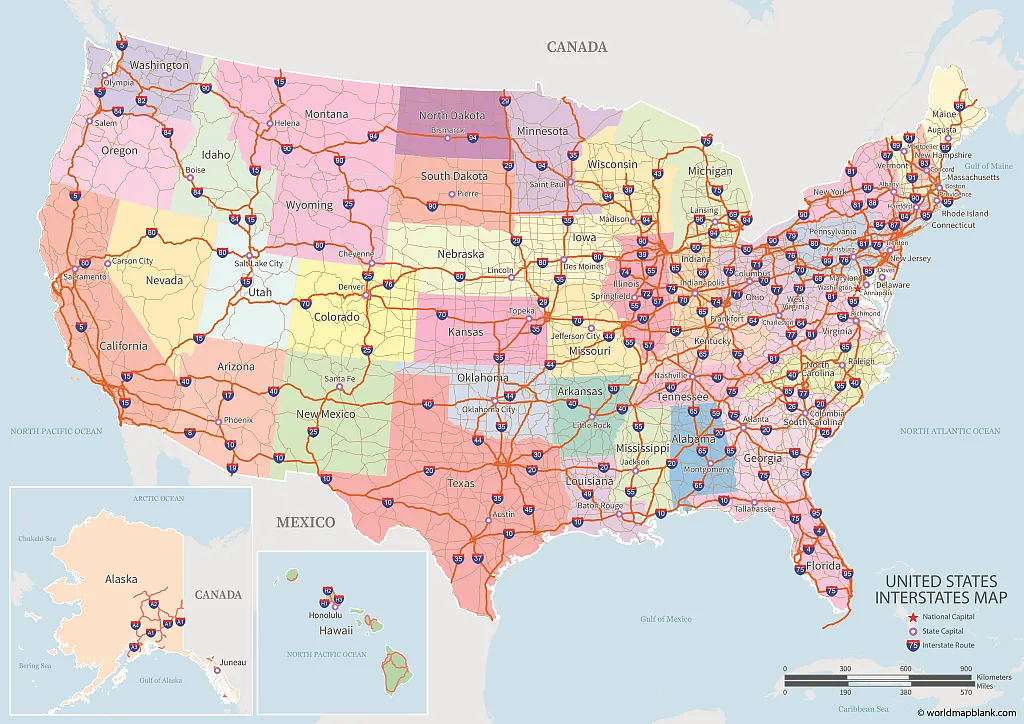
🗺️ Key Cities & Highway Projects Facing Resistance
Detroit, Michigan (I‑375)
Detroit is advancing a plan to remove the downtown I‑375 spur and replace it with a surface boulevard and open space. The project, estimated at $300 million, is explicitly framed as a way to reconnect neighborhoods and address its historically inequitable impact (Newsweek).
Seattle, Washington (SR‑99 / State Route 99 through South Park)
Community coalitions in Seattle’s South Park neighborhood are pushing to transform the aging, elevated SR‑99 into an equitable development corridor. A recent USDOT “Reconnecting Communities Pilot Program” grant ($1.6 million) supports community-based design and potentially full removal of the highway segment (CNU).
Rochester, New York (Inner Loop East)
Rochester successfully removed its eastern Inner Loop highway in 2017, replacing it with boulevards and mixed-use development, reconnecting neighborhoods and revitalizing downtown space (Mobilify). The city is now considering removing additional sections of the loop.
Syracuse, New York (I‑81 Viaduct)
Instead of rebuilding the aging elevated I‑81 through a primarily Black neighborhood, planners are pursuing the Community Grid Alternative, which will dismantle the viaduct entirely and restore the street grid and neighborhood connectivity (Mobilify).
New Orleans, Louisiana (Claiborne Expressway, I‑10 / I‑610)
The Claiborne Expressway, built in the 1960s, damaged New Orleans’ Tremé neighborhood. In recent years, advocates have campaigned for its removal and neighborhood restoration. Although no official removal plan exists yet, the issue is central to broader “Reconnecting Communities” efforts (WIRED).
Milwaukee, Wisconsin (Park East Freeway)
One of the earliest freeway removal success stories occurred when Milwaukee demolished its Park East Freeway in 2003. The reclaimed land spurred housing development and public space, inspiring other U.S. cities to consider similar moves (Financial Times).
🔍 Other Cities Exploring Removals or Studying Alternatives
Baltimore, MD: US 40 (“Highway to Nowhere”) is being studied for potential removal, retrofit, or transformation as part of broader connectivity and community restoration efforts (usa.streetsblog.org).
Oakland, CA: I-980 removal is under study with community-led planning from grant funding programs (usa.streetsblog.org).
Albany, NY: Interstate 787 is being evaluated for removal or redesign via feasibility studies supported by USDOT (usa.streetsblog.org).
Tulsa, OK: Officials are exploring removal of I-244, constructed over the historic Black Wall Street neighborhood, with Reconnecting Communities funding (usa.streetsblog.org).
📋 Summary Table
These cases show a growing national movement—often part of USDOT’s Reconnecting Communities Pilot Program—to challenge the legacy of mid‑century highway projects. The strategy combines grassroots activism, equity‑focused planning, legal and environmental frameworks, and alternatives that prioritize people over vehicles (Wikipedia, Bloomberg.com, Esri, CNU, prrac.org, Mobilify, Wikibooks, WIRED, usa.streetsblog.org, expressnews.com).
Let me know if you'd like an interactive view or more details on a specific project!


