Saturday, May 7, 2016

Health Impacts Near Interstate Highways: More Connector impacts not considered in EIS


Lafayette Connector Conceptual Image

New research shows a link between heart and lung impairment and living near an interstate highway. This research further brings into question the propriety of promoting public use of areas in the vicinity of an interstate. A news report describing these findings was published in the Boston Globe on April 14, 2016. Follow this link to read the story
https://www.bostonglobe.com/metro/2016/04/13/new-evidence-dangers-living-near-highways/hVyqTnY4iyn9YRoNSwWtGI/story.html

These findings bring starkly into question the Lafayette Connector Conceptual Design as displayed in their cover photo (above). Promoting pedestrian use, concerts, parks, playgrounds, and other recreational uses under and surrounding the elevated interstate is ill-advised if such activities may increase health risks. Indeed, the social justice of new urban interstate construction is questionable when findings show that residents living near interstates suffer health risks not shared by the rest of the community. Future use of downtown venues for public festivals and concerts will be jeopardized by the Connector.


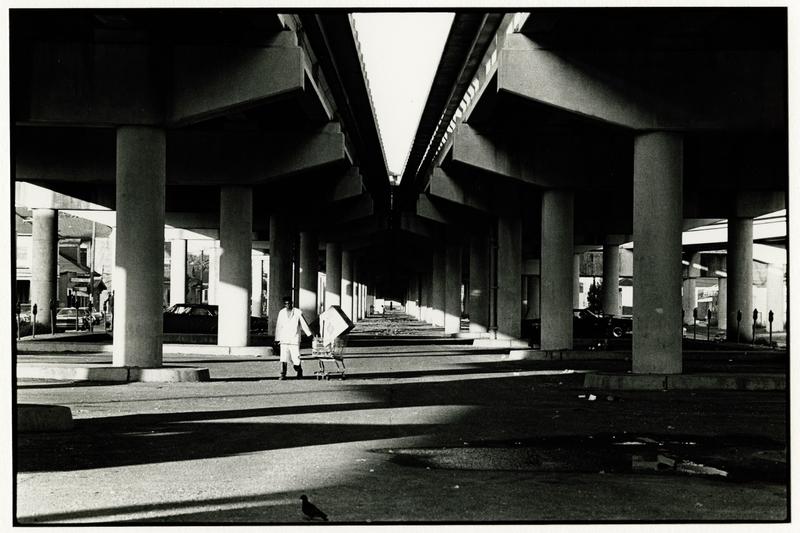
Foreshadowing the Lafayette Connector: 'The Monster' - Claiborne Avenue Before and After the Interstate

Photo: The Historic New Orleans Collection
George Santayana is credited with saying "Those who cannot remember the past are condemned to repeat it." With that in mind, look at the history of destruction left by the Louisiana DOTD as they developed urban interstates in the 1960's. In New Orleans they proposed the Riverfront Expressway through the French Quarter and along the Mississippi River. Thankfully, the public outcry prevailed to stop the French Quarter section of interstate, but the Expressway was built through the Treme neighborhood over Claiborne Avenue in 1968.

Read more about this history of loss in this WWNO post titled 'The Monster': Claiborne Avenue Before And After The Interstate.  http://wwno.org/post/monster-claiborne-avenue-and-after-interstate

Plans for the Lafayette Connector date back to this era of urban destruction and social injustice. How can DOTD prevent the same destruction and injustice in Lafayette today that they brought about nearly 50 years ago in New Orleans?

Friday, May 6, 2016

Health Hazards from Toxic Construction Dust

Victory Garden
As just one example, the Victory Garden on S. Pierce Street 
will be in danger of contamination from construction dust 
containing lead, arsenic, asbestos, and other toxics (photo by 
M. Waldon, no rights reserved).
Abandoned rail yards are typically found to have very high levels of contamination from numerous toxic materials. Among these are lead (paint and batteries), arsenic (widely used by railroads for pest control, weed control, and as a wood preservative in rail ties),  and asbestos (steam engine firebox and boiler). It is believed that very high levels of these substances contaminate the soil in the abandoned rail yard and along the rail line within the I-49 Connector area. Any construction involving vehicular traffic driving across this soil, and any soil excavation will result in liberation of these toxics as dust.

How will toxic dust be monitored within and at the fence line of the Connector project?

How will the workers on-site be protected? Will all workers be required to wear respirators or other protective devices during construction?

How will the public, particularly neighborhood children, be protected from this hazardous toxic dust?

Loss of cultural venue the Feed N Seed

Feed N Seed
The Feen N Seed at 106 N. Grant Street has marked for removal
by the Louisiana DOTD. Photo - M Waldon, no rights reserved.
How can the DOTD mitigate the cultural loss to our community as they destroy the Feed N Seed (http://feednseedlafayette.com/) and other historic and cultural sites in our city? This venue provides the community with diverse offerings such as the performance and release party described in an article in The Advocate titled "Mike Dean to release new live album at Feed N Seed in Lafayette."

The article is available at:
http://theadvocate.com/entertainment/music/15690262-123/mike-dean-to-release-new-live-album-at-feed-n-seed-in-lafayette?fb_action_ids=10205025483350241&fb_action_types=og.comments

Earlier in 2016, a video recorded at the Feed N Seed appeared on NBC's Today Show:
http://www.theadvertiser.com/story/news/local/acadiana/2016/03/19/lafayette-featured-today-show/82012870/

To see more recent news, Google Lafayette Feed N Seed and click News, or use this link
https://www.google.com/search?q=Lafayette+%22Feed+N+Seed%22&rlz=1CALEAD_enUS617US618&oq=Lafayette+%22Feed+N+Seed%22&aqs=chrome..69i57j0l5.11996j0j4&sourceid=chrome&ie=UTF-8#q=Lafayette+%22Feed+N+Seed%22&tbm=nws

Public-Space Transformations

On Wednesday, May 4, 2016, Jason D. Faulk posted a comment on Facebook: https://www.facebook.com/jasondelanedoubleyou/posts/10209013383668993
In the post, he cites an article in Business Insider titled "11 dramatic public-space transformations captured by Google Street View" which concludes that "cities across the world are becoming less car-oriented and more pedestrian friendly":
 http://www.businessinsider.com/amazing-google-street-view-changes-2016-5

Jason Faulk states:
Most dramatic are the conversions of a street in Minneapolis, and the covering of the open-air recessed freeway in Dallas. All of which beg: if Lafayette, LA wants to spend $700 million to $1 billion on a 5 mile freeway connector, what other potentialities for urban space, that creates value for human beings on the ground, in private and public spaces are possible?‪#‎Y49Lafayette‬ indeed.‪#‎LafayetteConnector‬

What other possibilities for use of this space were considered instead of the urban freeway planned in this project?

This Facebook post generated interesting dialog through comments. I request that DOTD provide a response to this post and its associated comments.